Despite a history of prophetic dreams during my youth, the return of dreams after more than a 25-year hiatus was startling to say the least. After my dreams led me to people who each in turn told me in some manner that I should attend a specific seminary, they abruptly ended once I took the step to comply. For 25 years I was not only without prophetic dreams, but without any dreams during sleep at all. I could not recall even one occasion during that span during which I woke up with a dream. However, they returned abruptly during November of 2014, less than two weeks prior to Thanksgiving. It was only the second occasion in my life where I experienced a dream during which I believed myself to be awake, and that I was escorted somewhere else (i.e., I had a week of dreams during childhood during which I believed I had been transported to the presence of God and shown a vision of my world being destroyed by fire until God put a cessation to the judgment and instituted the restoration of all things to Himself). Both of these episodes were lucid and vivid, and I recalled as I awoke, the sights, aromas, and sounds of the place where I had just been. In fact, the memory of these events remains palpable and real to me down through the current day. In the 2014 dream, an angelic creature plucked me out of my room all the while referring to me as a “son of man.” I was given three words and a vision and told to listen carefully and recall, as the “fate of the world” depended upon it. I must say that while taking the dream seriously upon awakening, which also awoke my family, I was very much shaken up by the experience. I also wondered about the cryptic nature of the message I received, and wondered why God would not have just delivered some very specific instructions. As covered elsewhere in my writings, I believe that God is working mysteriously through these events to bolster my awareness of the supernatural and to provide my doubting heart with steady, reliable confirmations of His miraculous will.
Over the course of the next few days, odd and quirky events and unpredictable “coincidences” occurred. Again, these events were witnessed by family and friends, and drove me deeper into my exploration of the initial dream. This also made it clear to me that there are no coincidences. Our Lord, Jesus Christ, stated plainly that the Father knows the hairs on our heads (Luke 12:7) and that He concerns Himself with the smallest details of life (Matthew 6:26-34). Those who follow Him become children of God, and we are of the greatest value to our Lord.
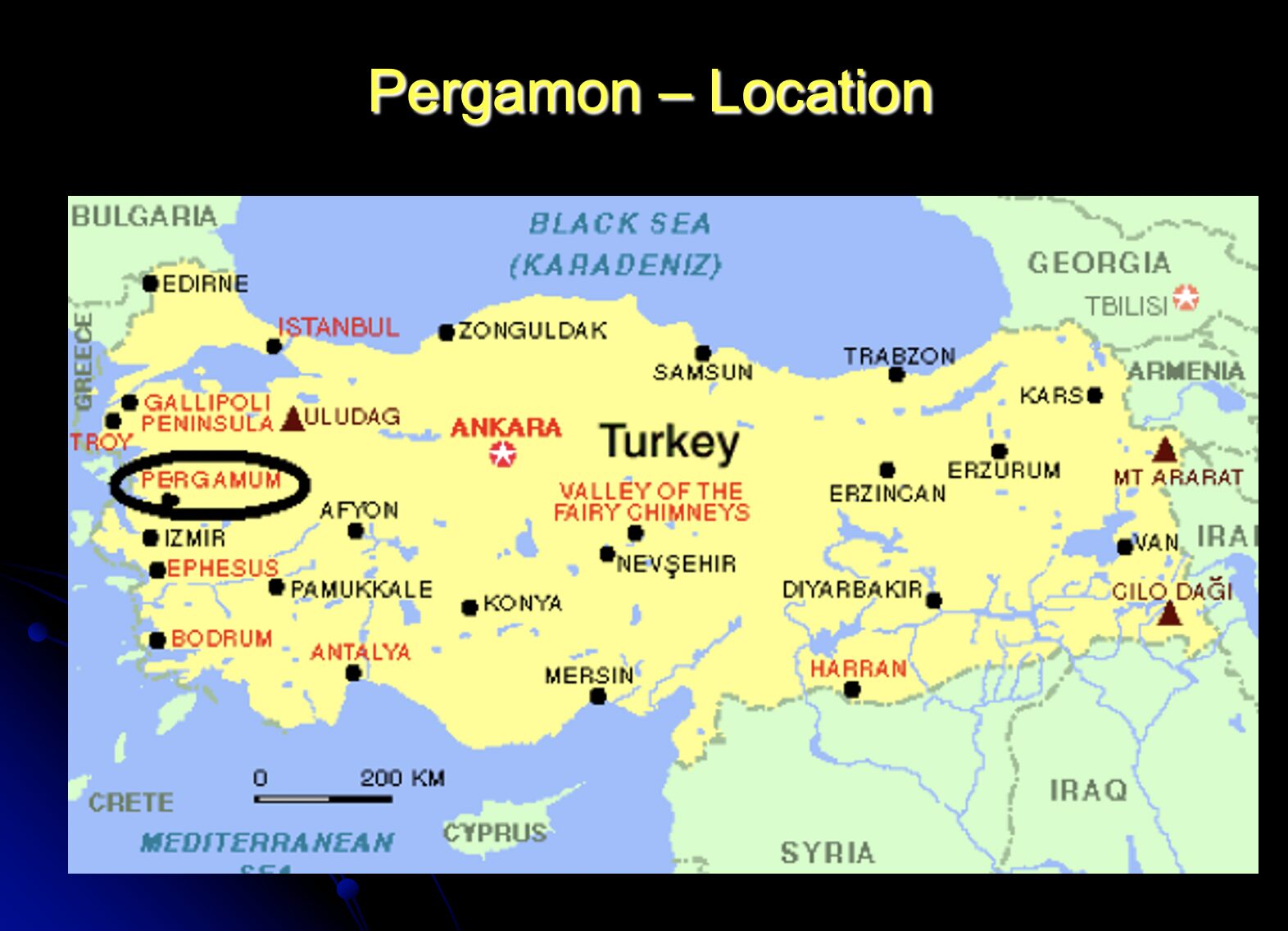
Pergamos, the altar of Zeus, and “Satan’s throne”
I rapidly discovered that Pergamos was not only a city in Turkey but contained one of the churches that the risen Lord, Jesus Christ addressed in the Book of Revelation (Revelation 2:12-17).1 In the Pergamos letter, He referred to Pergamos as “the city where Satan dwells” and “where Satan’s throne is.” It was as if I were reading the words of this Scripture for the first time, and I really could not recall ever seeing this passage before. I knew that I was suddenly looking at these passages with fresh eyes, and, contemplating them in a literal rather than metaphorical manner. And, I knew in my spirit, that this was the correct interpretation, as God provided a quickening and impartation of knowledge that I did not previously possess. I quickly learned that some scholars believed the Pergamon altar of Satan to be the historical “Altar of Zeus,”2-4 built during the zenith of the Greek empire (circa 166-156 BC) more than 150 years after a young Alexander the Great conquered the known world of his day (Alexander ruled from 336-323 BC).5 Interestingly, I would soon learn that Alexander himself had several encounters throughout his life that led him to believe that he was some form of divinity (e.g., the demigod son of Zeus). The historian, Flavius Josephus, in his Jewish Antiquities (written between 92-94 AD),6 records that Alexander (circa 322 BC) allowed the Jews to continue their religious practices as they showed him the prophecies of Daniel (written a few hundred years earlier – circa late 6th century BC as written directly by Daniel; Babylon conquered Israel in 586 BC, destroying the holy temple on the 9th of Av ), which predicted his conquest of Persia (Jewish Antiquities, 11.337-11.339). Legend has it that Alexander’s mother, Olympias, told him that his true father had been Zeus, who had impregnated her as a virgin (some legends suggest that Zeus took the form of a serpent, although accounts vary).5, 7 Alexander would also be claimed by the Egyptians, who he would also go on to conquer, as an incarnation of one of their deities after visiting the oracle of Siwa (i.e., Zeus-Ammon). As a modern scientist, all of these ideas seemed far-fetched, but God was telling me to dig deeper and to suspend my knowledge of the science of the day. He reminded me that the wisdom of the age is often folly (I Corinthians 3:18-23) and can keep men from the truth of Scripture.
[11.337] And when the Book of Daniel was showed him wherein Daniel declared that one of the Greeks should destroy the empire of the Persians, he supposed that himself was the person intended. And as he was then glad, he dismissed the multitude for the present.
But the next day he called them to him, and bid them ask what favors they pleased of him;
[11.338] whereupon the high-priest desired that they might enjoy the laws of their forefathers, and might pay no tribute on the seventh year. He granted all they desired. And when they asked him that he would permit the Jews in Babylon and Media to enjoy their own laws also, he willingly promised to do hereafter what they desired.
[11.339] And when he said to the multitude, that if any of them would enlist themselves in his army, on this condition, that they should continue under the laws of their forefathers, and live according to them, he was willing to take them with him, many were ready to accompany him in his wars.
Flavius Josephus, Jewish Antiquities 11.337–11.339
It was believed that the Altar of Zeus (throne of Satan) was built by King Eumenes the 2nd (reigned from 197 to 159 BC).5, 8, 9 It was actually a large structure that is thought to have served as the entrance to the Temple of Zeus (see details of the historical construction of the Altar and Temple and the significance of the many carvings on it in related sources). It is worth noting that its carvings include an account of the gigantamochy - which is the battle between the Greek gods and the Titans, which appears to parallel the Genesis 6:4 account of the fallen angels who left their natural estate to have sexual relations with human women. According to II Peter 2:4 and the extra-biblical, 2nd temple period, Book of Enoch, these rebels were put in a pit by God the Father. These connections between the writings of the Greeks about the gigantamochy and the biblical and extra-biblical Hebrew texts were made by several early church fathers, such as Justin Martyr, Tertullian, Irenaeus, and Jerome. Flavius Josephus, the historian, also interpreted the Genesis account as pertaining to angels.
The gigantomachy and the sons of God
From Chapter 5, The Second Apology of St. Justin Martyr:10, 11
“God, when He had made the whole world, and subjected things earthly to man, and arranged the heavenly elements for the increase of fruits and rotation of the seasons, and appointed this divine law — for these things also He evidently made for man — committed the care of men and of all things under heaven to angels whom He appointed over them. But the angels transgressed this appointment, and were captivated by love of women, and begot children who are those that are called demons; and besides, they afterwards subdued the human race to themselves, partly by magical writings, and partly by fears and the punishments they occasioned, and partly by teaching them to offer sacrifices, and incense, and libations, of which things they stood in need after they were enslaved by lustful passions; and among men they sowed murders, wars, adulteries, intemperate deeds, and all wickedness. Whence also the poets and mythologists, not knowing that it was the angels and those demons who had been begotten by them that did these things to men, and women, and cities, and nations, which they related, ascribed them to god himself, and to those who were accounted to be his very offspring, and to the offspring of those who were called his brothers, Neptune and Pluto, and to the children again of these their offspring. For whatever name each of the angels had given to himself and his children, by that name they called them.”
Justin Martyr, Second Apology, ch. 5
Excerpt from the Book of Enoch:
“And it came to pass when the children of men had multiplied that in those days were born unto them beautiful and comely daughters. And the angels, the children of the heaven, saw and lusted after them, and said to one another: 'Come, let us choose us wives from among the children of men and beget us children.'...
1 Enoch
And all the others together with them took unto themselves wives, and each chose for himself one, and they began to go in unto them and to defile themselves with them, and they taught them charms and enchantments, and the cutting of roots, and made them acquainted with plants.
And they became pregnant, and they bare great giants... Who consumed all the acquisitions of men. And when men could no longer sustain them, the giants turned against them and devoured mankind.”
The Book of Enoch is considered Jewish pseudopigrapha (i.e., a work whose author attributes it to another known figure). It is known that the Book of Enoch goes back to at least the 2nd century BCE, but no one knows its definitive author or origin. It was not considered part of the Hebrew or Christian canons, although it clearly had significant effect on Jewish and Christian thought (e.g., as noted, both Peter and Jude borrow directly from it).
From 2 Peter 2:4-5 (NKJV):
4 For if God did not spare the angels who sinned, but cast them down to hell (Greek: Tartarus) and delivered them into chains of darkness, to be reserved for judgment; 5 and did not spare the ancient world, but saved Noah, one of eight people, a preacher of righteousness, bringing in the flood on the world of the ungodly;
2 Peter 2:4–5 (NKJV)
This appears to parallel passages in Jude and Enoch. The fallen angels of Genesis 6:4 episode occurs just prior to God bringing the flood due to the ungodliness of His created world. This is the only passage in the Bible that adopts the Greek word “Tartarus.” While many versions of the Bible translate ‘Tartarus’ as Hell, a number of translations use the literal word, Tartarus, or simply say “the pit” (see Berean Bible, Literal Standard Bible). The Greeks actually used this word to describe a prison that was kept far below Hell, as they said it was a special prison in which the Greek gods placed the Titans after their defeat in the gigantomachy. This explanation seems to be a retelling of the biblical account of fallen angels from the point of view of the fallen spiritual world, which replaces God in this account with Zeus (Satan) as the one doing the punishing. This is not surprising, given that the Pergamon altar is a shrine in honor of Zeus, considered the King of the Greek pantheon of gods. In the Iliad, written by the Greek poet, Homer (circa, 8th century BC), Zeus asserts that Tartarus is “as far beneath Hades (i.e., Hell) as heaven is above earth.”12
Understanding the worldview of the writers of the Bible is critical, it we want to truly understand the points that they wanted to convey to us. Understanding the Genesis 6 episode as involving fallen angels makes many actions of God clearer. Other sources to explore these topics are included, although the authors of the Remnant of the Way do not necessarily endorse all points made by various scholars. With regards to some of these more controversial, unresolved topics, it is ultimately best to take one’s questions directly to Scripture for their resolution.
Various works that touch on the 6th chapter of Genesis, the concept of Tartarus, and the supernatural biblical worldview of the apostles include:
- Works from Michael Heiser, such as Unseen Realm.
- https://chasingthegiants.com/sources/#sources-bc – A website exploring the Genesis 6:4 account and the offspring of the angels and human women (i.e., Nephilim).
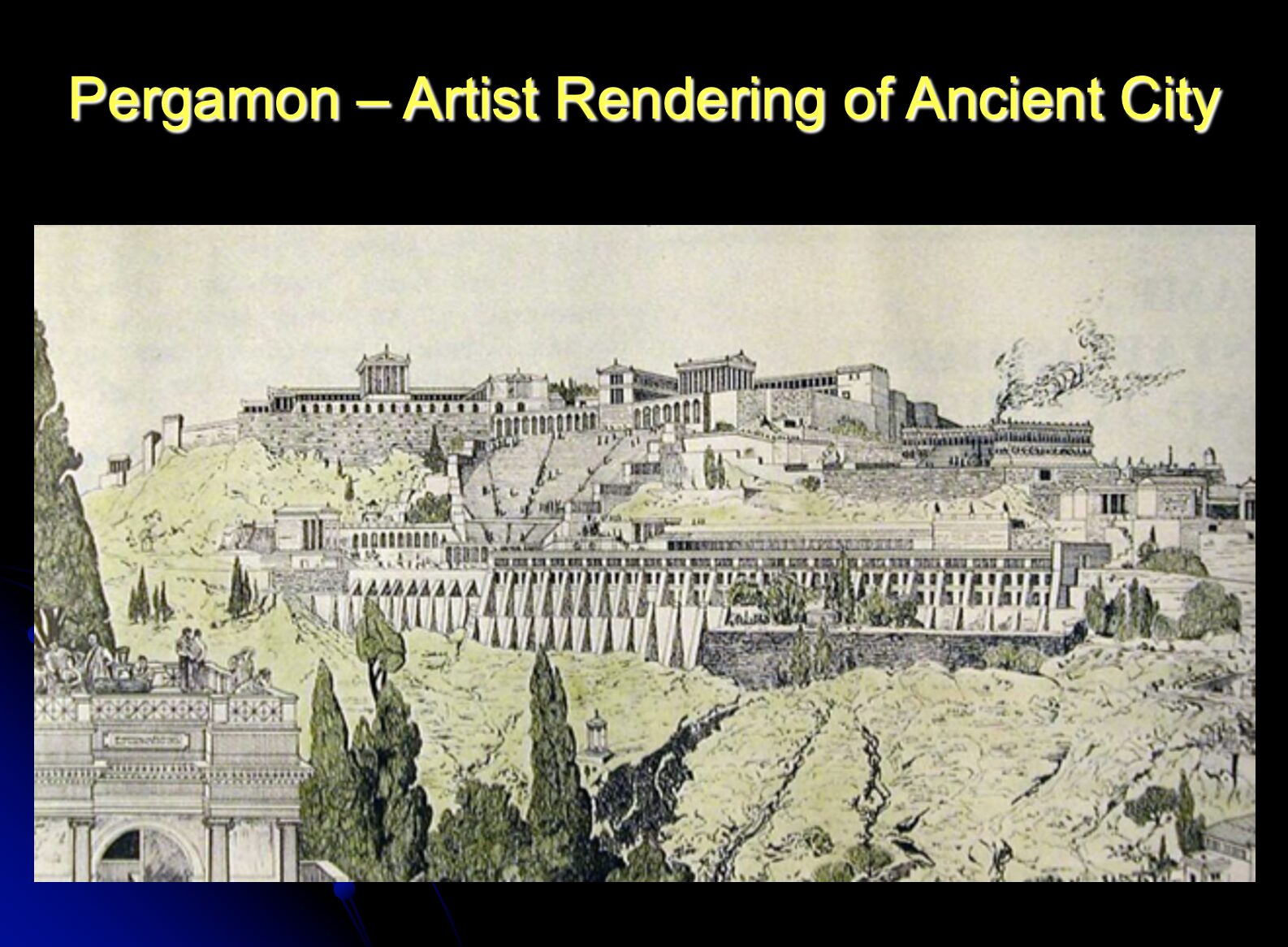
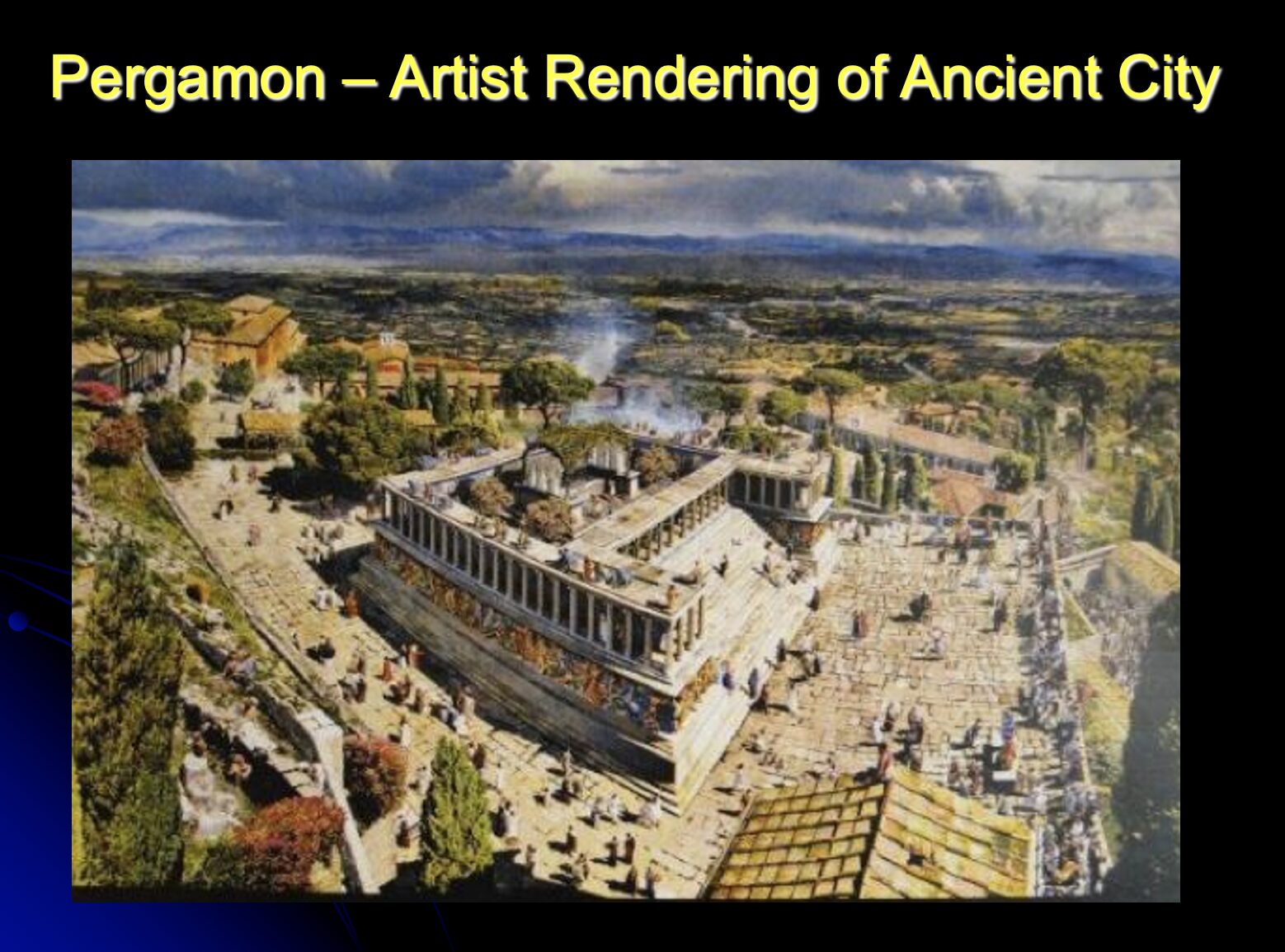
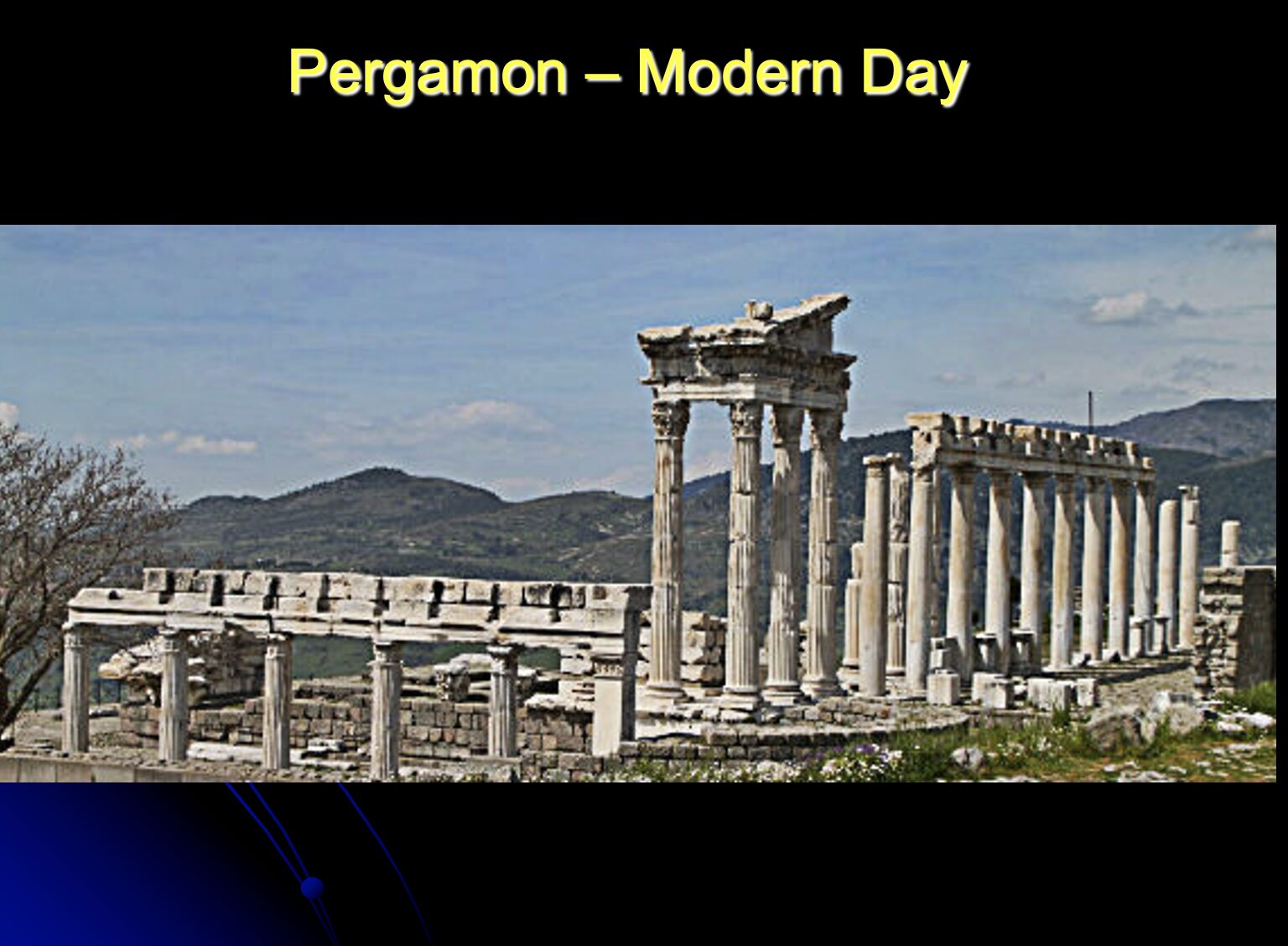
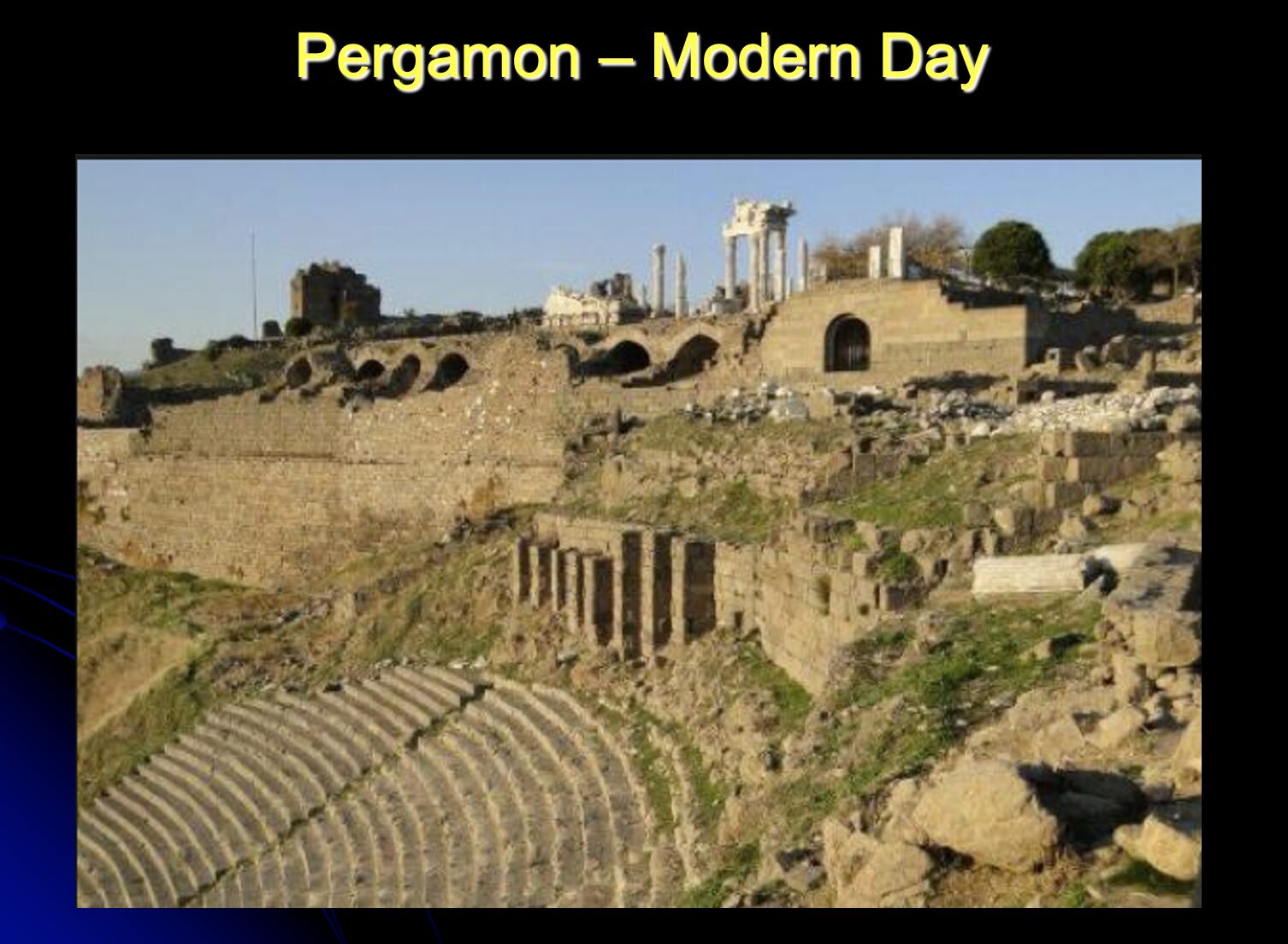
Pergamon: a seat of science and of mysticism
Mysticism and religion.
- Known for its many temples, originally built to worship the Greek pantheon of gods.
- Shrines to its rulers.
- The cult of Asclepius.
- Later a site of emperor worship under the Roman Empire.
- Egyptian influence (the cult of Isis).
- The Chaldean priesthood is thought to have established a base here after the Persians conquered Babylon.
Science.
- The first mental hospital.
- The Library of Pergamon — second only to the library of Alexandria, Egypt. Mark Antony was said to have given part of the collection to Cleopatra at their wedding, after the fire that damaged the Library of Alexandria.
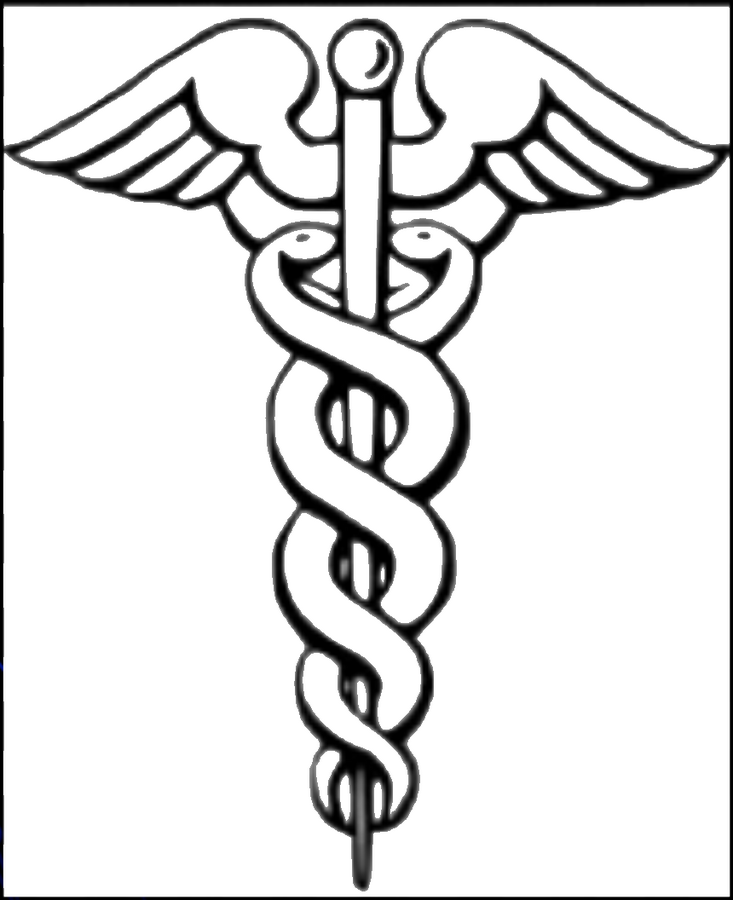
- The healing cult of Asclepius — a contributor to the symbols and code of modern medicine.
- The birthplace of Galen, during the 2nd century AD.
Eumenes II, Antiochus, and the first abomination
There is another sidenote worth mentioning here, in that King Eumenes II is believed to have mentored a young Greek leader by the name of Antiochus (215 BC to 164 BC).13 There is clear evidence that Eumenes II assisted Antiochus to power after a prior conflict with Rome found him a captive in that setting for a time.14 Antiochus is said to have studied with Eumenes II and learned the worship of Zeus from him. He would go on to become a leading commander, who would inherit the territories of the Greek empire that included Israel, Egypt, and other Middle Eastern Regions (i.e., the Seleucid Empire).15 After a rumor of his death reached Israel, the Maccabees attempted to take control of the Temple from the proxy leadership that was in charge.16 It turned out that Antiochus had not been killed in Egypt and he returned with his armies to quell any rebellion. It is said that he put many among the Jewish people to death (see quote from 2nd Maccabees below). He also desecrated the Jewish temple and its altar by slaughtering a pig upon it. Of note, for the first time, I noticed something new to me in this story that I had previously overlooked. Antiochus instructed the artisans among his armies to construct a statue of himself in the image of Zeus. He placed this on the altar of the Holy Temple of the Jews and declared “today I am Epiphanes.” That is, he declared himself to be God in the Holy Temple of the most-high God. This was the ultimate blasphemy, and also suggested to me that he may well have believed himself to be a god. Had he encountered some fallen spirit – like Alexander the Great before him? It also established a link between someone with a direct historical lineage from the Throne of Satan and an event that attempted to desecrate the Temple of God and to destroy His Holy people. And, this would not be the last time that such a connection would occur.
Description of Antiochus Epiphanes rage against Israel from 2 Maccabbees 5:11-14:
“When these happenings were reported to the king (Antiochus; sic), he thought that Judea was in revolt. Raging like a wild animal, he set out from Egypt and took Jerusalem by storm. He ordered his soldiers to cut down without mercy those whom they met and to slay those who took refuge in their houses. There was a massacre of young and old, a killing of women and children, a slaughter of virgins and infants. In the space of three days, eighty thousand were lost, forty thousand meeting a violent death, and the same number being sold into slavery.”
2 Maccabees 5:11–14
Likewise, from the Greek historian, Diodorus:
Antiochus “sacrificed a great swine at the image of Moses, and at the altar of God that stood in the outward court, and sprinkled them with the blood of the sacrifice. He commanded likewise that the books, by which they were taught to hate all other nations, should be sprinkled with the broth made of the swine’s flesh. And he put out the lamp (called by them immortal) which burns continually in the temple. Lastly, he forced the high priest and the other Jews to eat swine’s flesh.”
Diodorus 34:1(4)
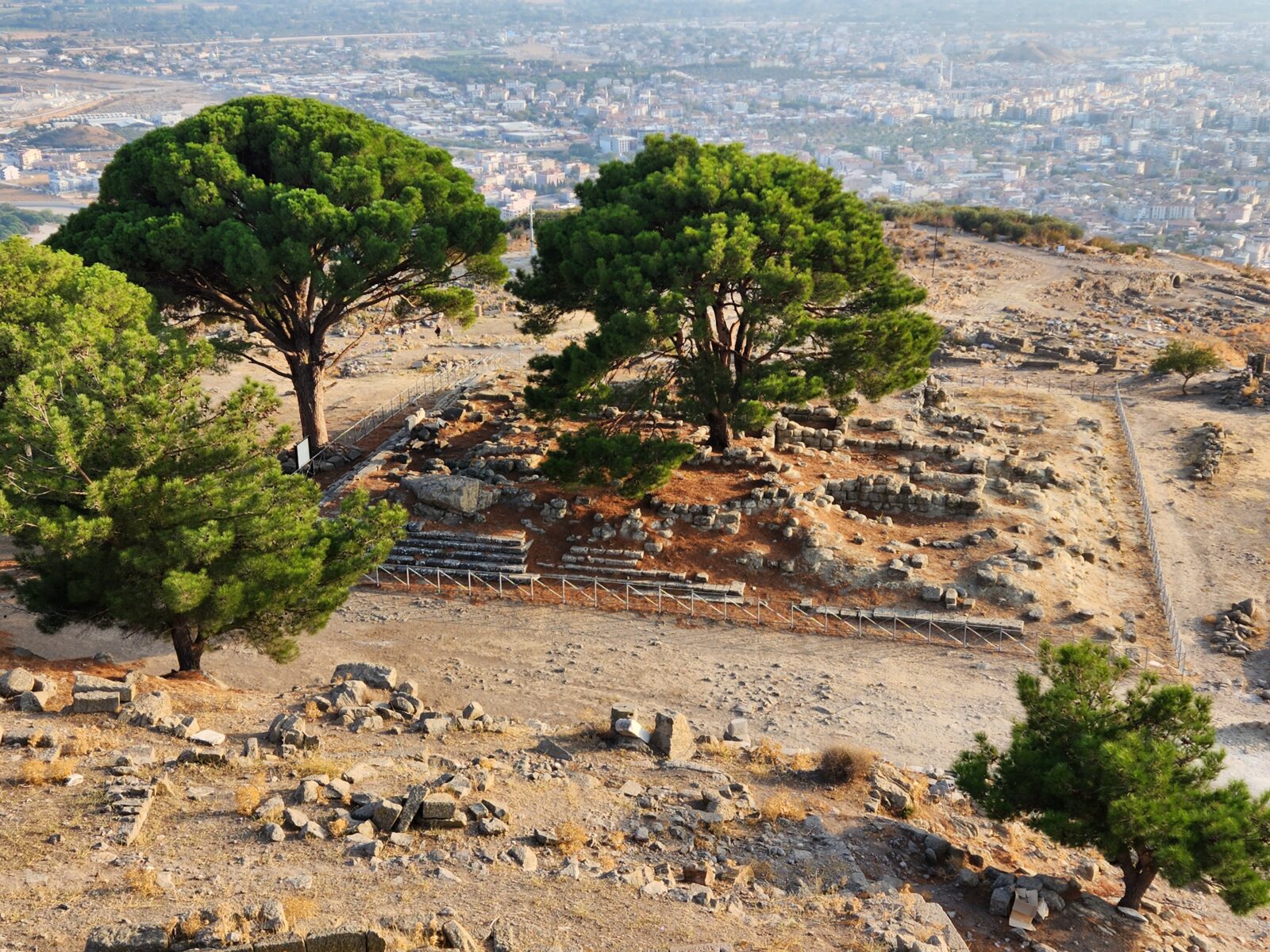
Antipas — the faithful servant of God and a martyr’s death
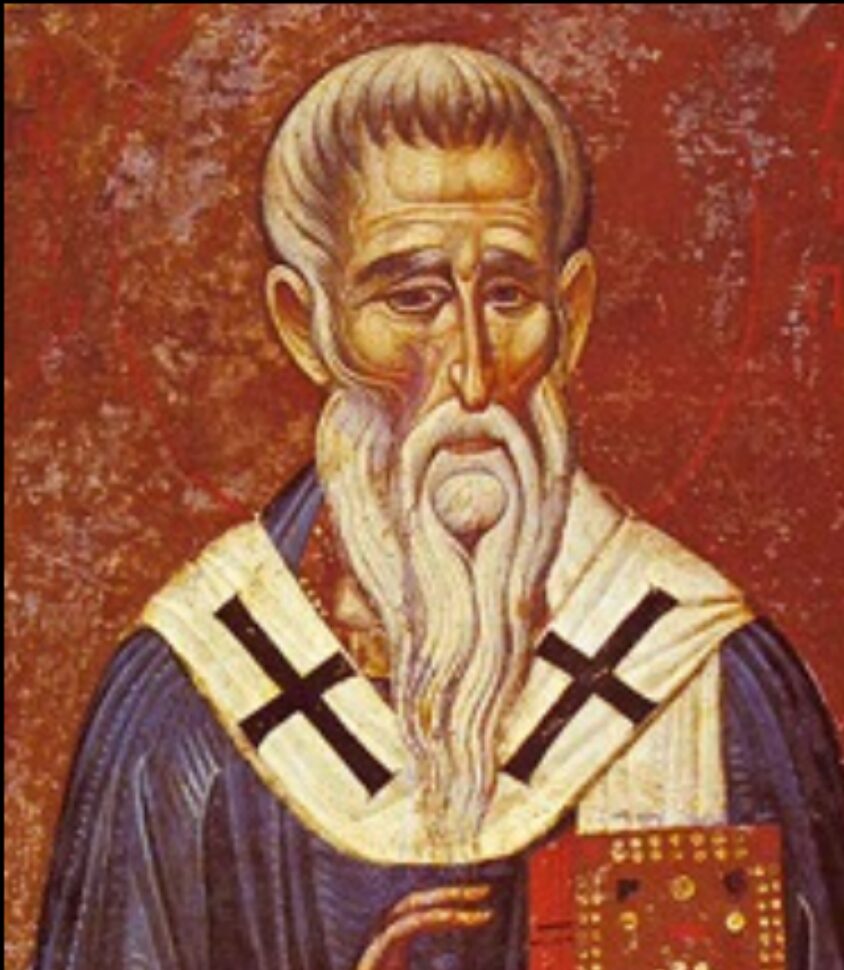
I next explored the meaning of “Antipas,” who is described as a “faithful servant” of the Lord Jesus Christ, who was “faithful even to the point of death.” The text of Revelation does not explain any more about the story of Antipas. However, I found myself needing to know more about this character from a dream. I would soon discover that the Orthodox and Catholic churches have a traditional story passed down about Antipas, which claims that he had been a pagan who was converted to the Way by the apostles, likely after Paul took the Gospel to the gentiles of Asia Minor during the first century AD.17, 18 It is held that Antipas was converted and became a leader in his local church. The city of Pergamos had been given to the Romans by the Greeks after the balance of power began to shift between the empires (Attalus of Pergamon willed the city to Rome upon his death).19 That is, the Greek empire began fading and the Roman Empire rose in its place. It is reported that Antipas angered a local cultic group, as they complained to the Roman magistrate that the prayers of Antipas were causing the spirits behind their healing temples to flee the region. This appeared very similar to the account in Acts during which Paul angered the locals by casting a demon out of a prophetess who had been used by the locals to turn a profit (Acts 16: 16-18). Paul was beaten and kicked out of town for his actions. In Pergamon, the local group was known as the Cult of Aesclepion, a religious order that grew up around the Greek stories about the demi-God Aesclepius, who was known for his power of healing.20-23 His followers created temples or dormitories throughout Turkey and the broader region of Asia Minor, where they would conduct healing rituals. In general, people would come to them from surrounding regions, and would be asked to sleep there for a few days or a week. They would be given various herbs and medicinal compounds and would be asked to tell the priests of Aesclepius their dreams. At times, the priests would make symbols of the affected body parts. The dormitories were filled with non-poisonous snakes, known as aesclepius, and it was considered good luck if they slithered over a person during their sleep. The Roman magistrate reportedly had Antipas brought before him and demanded that he denounce his faith in Jesus Christ and burn incense on the altar of Zeus in the statue of a golden bull in worship of Zeus and the Roman Emperor.24 If he did not comply, he would be turned over to the priests of Aesclepius. Antipas, in fact, would not comply, and the tradition states that he was burned alive in the golden bull while continuing to preach to his local congregation. This turned out to be a strong witness for the faith of the Way, and saw more converts to this novel religion.
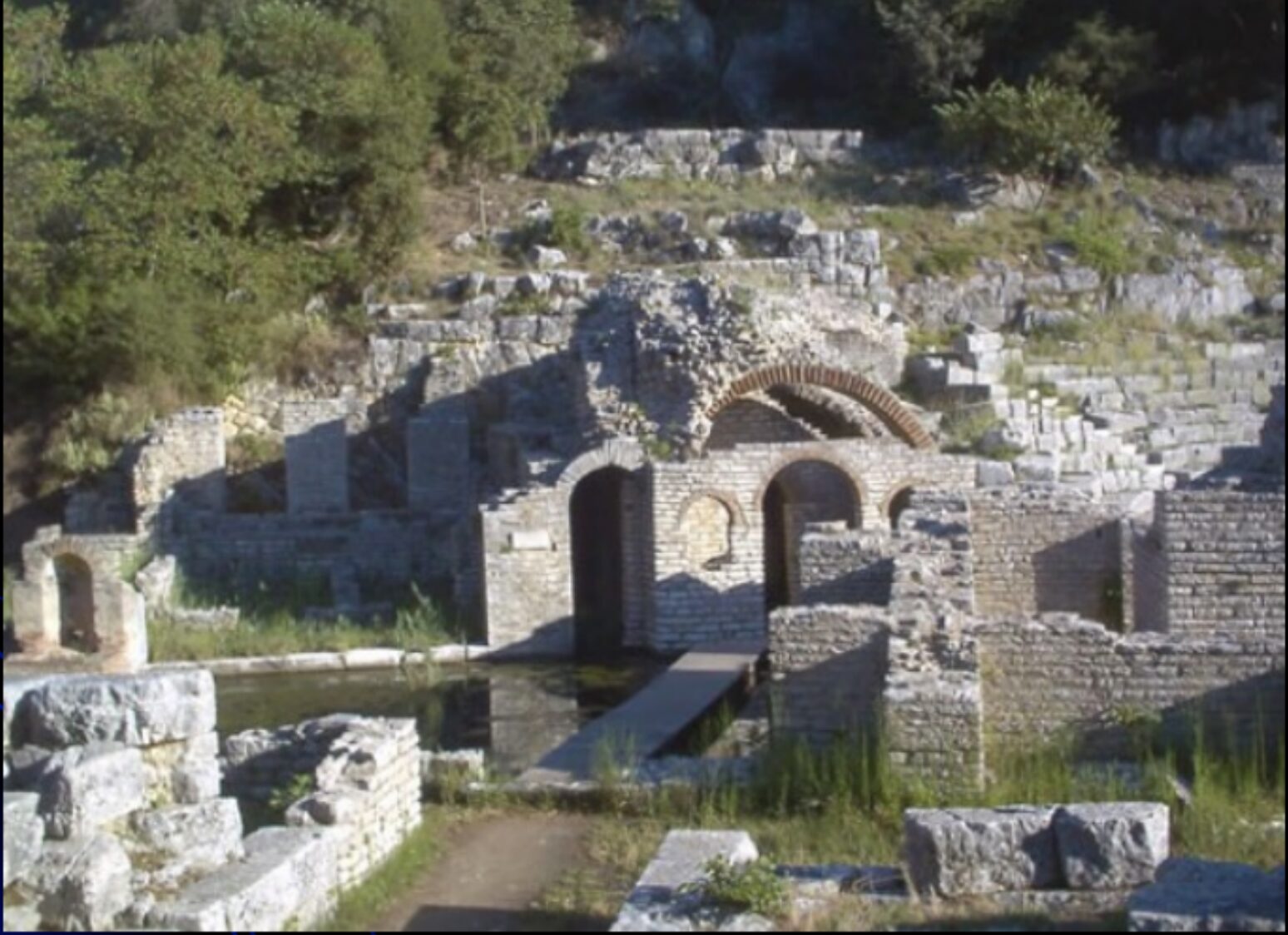
The cult of Asclepius
- Several Asclepion cults were found throughout Greece and Asia Minor during the 1st century AD.
- An Asclepion was a place of healing — in effect a dormitory — that developed around the demigod Asclepius.
- Asclepius was a Greek demigod known for his healing powers and for his use of a staff entwined by a serpent.
- He is said to have angered Zeus after healing Hippolytus.
Is the throne of Satan a physical reality?
Suddenly, with the initial dream and the additional background information, it became clear that Pergamos and the thrown of Satan were actually tangible, historical locations, which could be visited, and the thoughts were growing within me that perhaps there was a time when Satan had a historical base of operations right in the middle of planet earth. It also piqued my curiosity to determine what had become of the ancient altar, and to see if I could actually visit it in Pergamos. After a brief search and study, I realized that this would not be possible, as the Altar of Zeus no longer resided in Pergamos.
The throne of Satan gets a new home
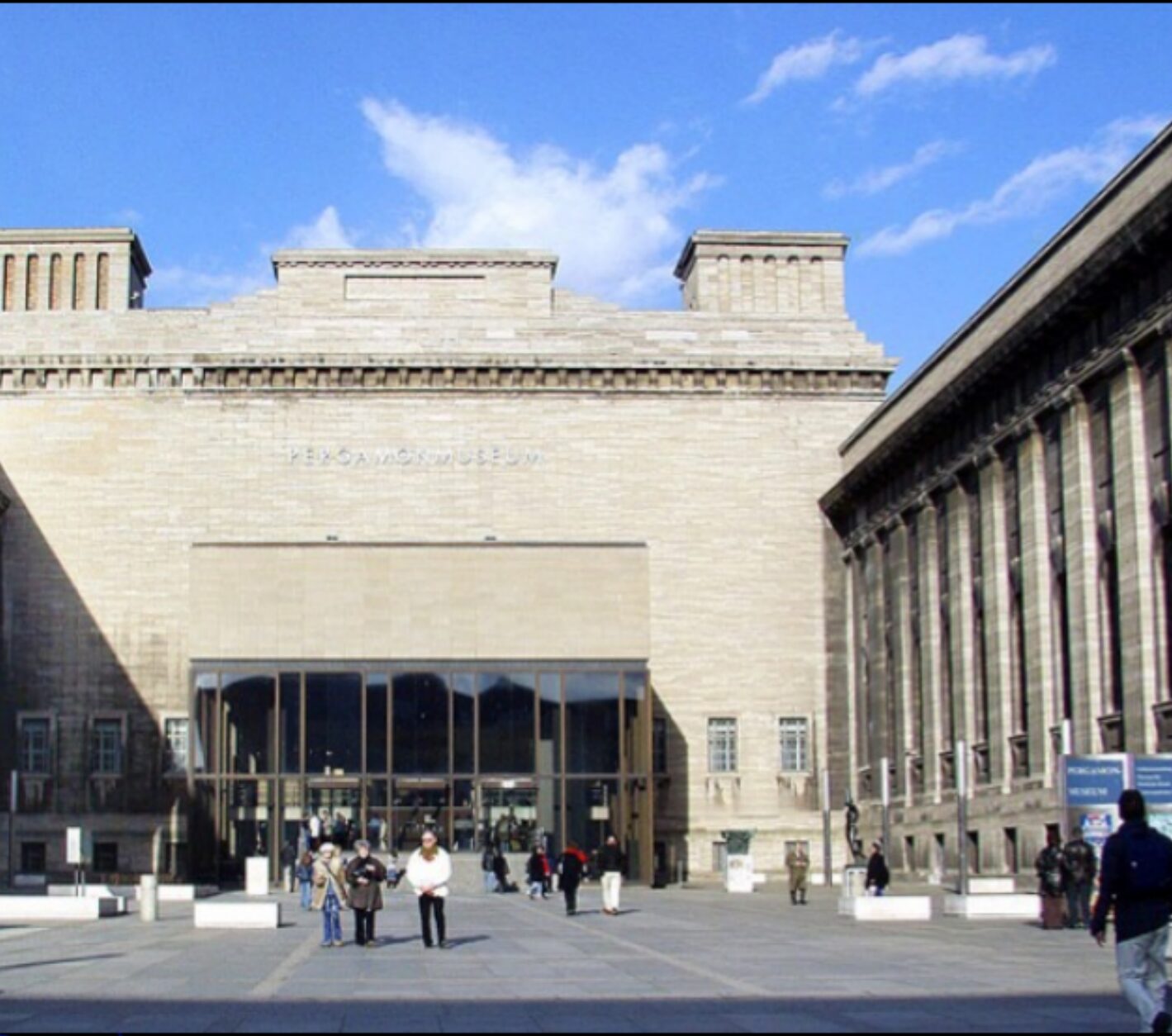
History records that the Altar of Zeus fell into disrepair after the demise of the Roman Empire, and the region of Pergamos fell under the sovereignty of the Ottoman Turk Empire for many years. Most of the Greek temples and statues fell into a state of disrepair and decay. Many of the opulent temples of these former Greek and Roman pantheons were lost to the sands of time, and were built over by new construction, and truly long forgotten. However, in the late 19th century (1870s), a German archeologist, Dr. Karl Humann, visited Pergamos, Turkey.25, 26 He discovered the ruins of the ancient altar and managed to cut a deal with the Ottoman Turks to purchase the rubble and ship it back to Germany. It turned out that the altar had been in Germany since the late 19th century, and had been restored, and turned into a centerpiece of their museum island in Berlin. I soon discovered that the Pergamon Museum is the largest and most visited museum in Germany. Interestingly, a young Adolph Hitler became enamored with it, and had his chief architect, Albert Speer, use the altar as the model for his Nuremburg Field viewing stand.27 He also held the luncheon for the 1936 Olympic Games at the actual Pergamon Altar. I found myself dumbfounded that the putative Throne of Satan had made its way to Germany and was reconstructed just in time for the rise of the Nazi party and the Fuehrer. The throne of Satan showed up for perhaps the worst atrocity of all time that would befall God’s people, the Jews. Seemingly this symbol of the dark lord happened to reappear just as evil would emerge from the shadows. Ironically, it would be this event which catalyzed the recreation of the nation of Israel and the re-gathering of the people of God back to the Holy Land. The Jewish people were burned in the furnaces of Nazi Germany, with the Throne of Satan prominent in the landscape, once again overshadowing an affront on God and a desecration of His people.
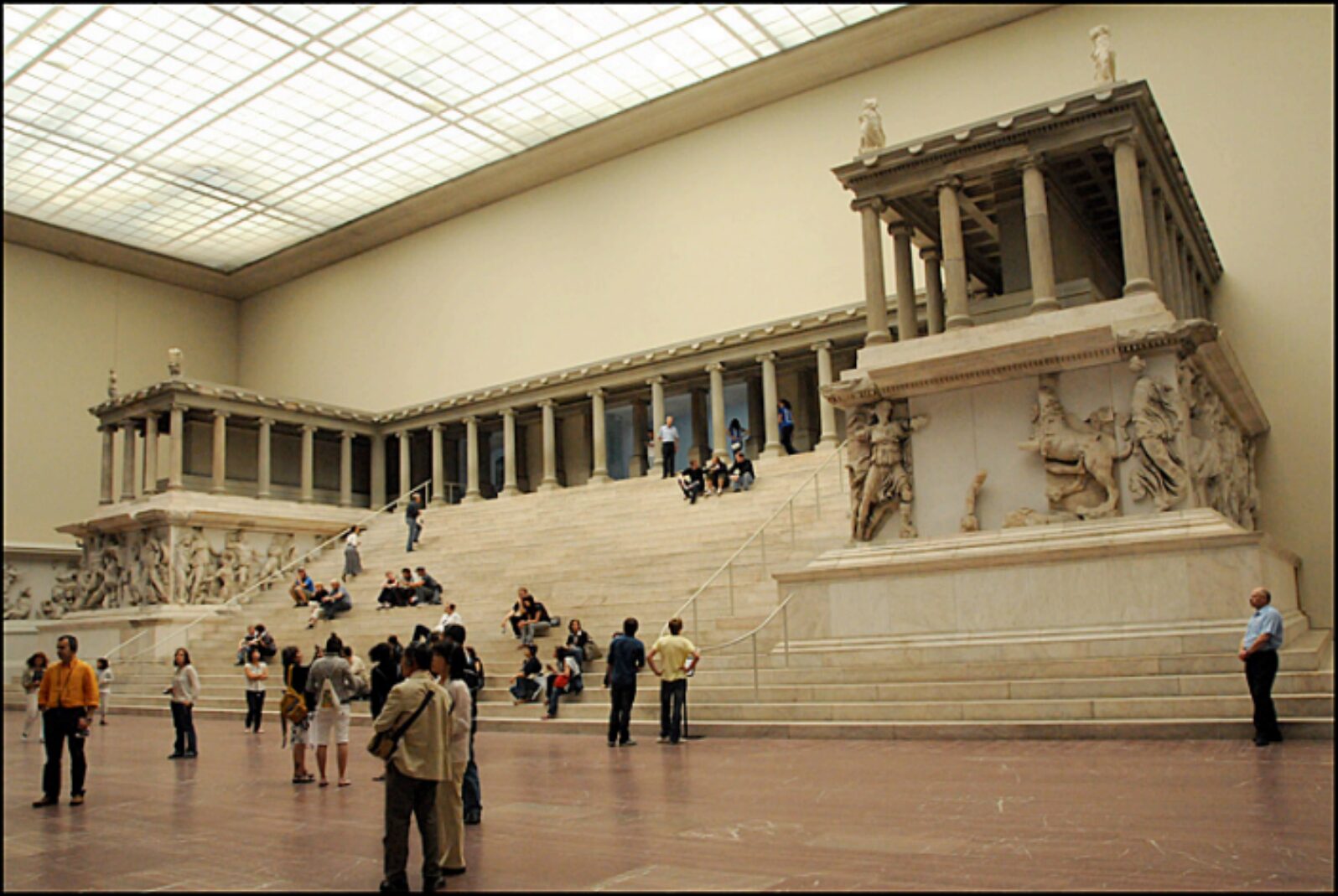
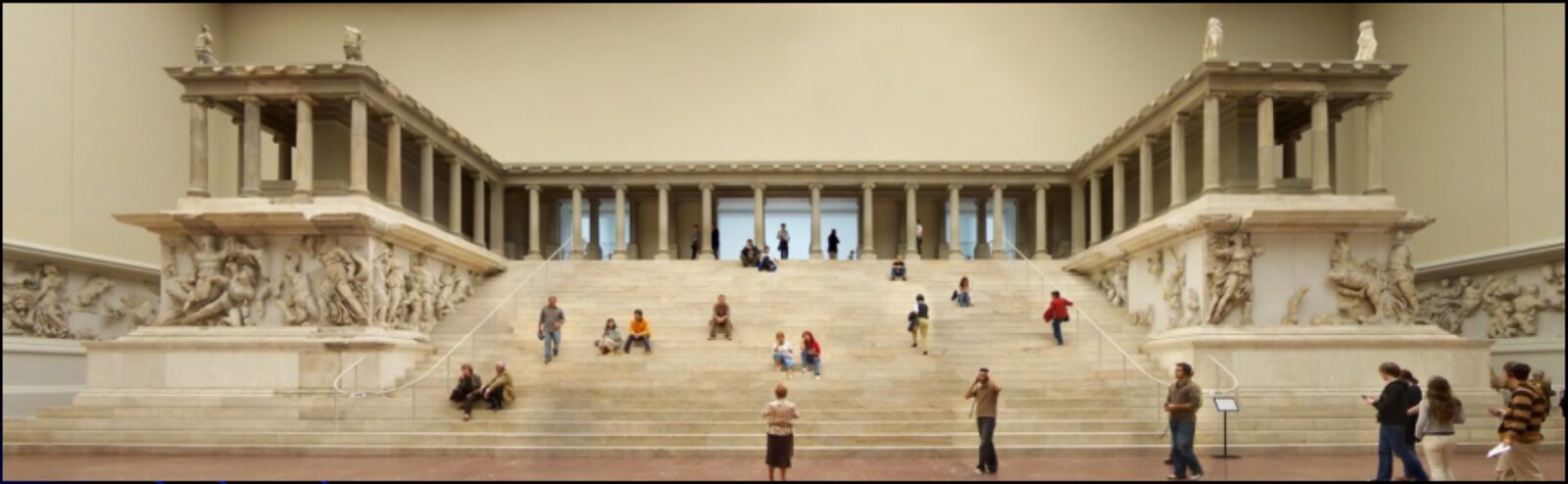
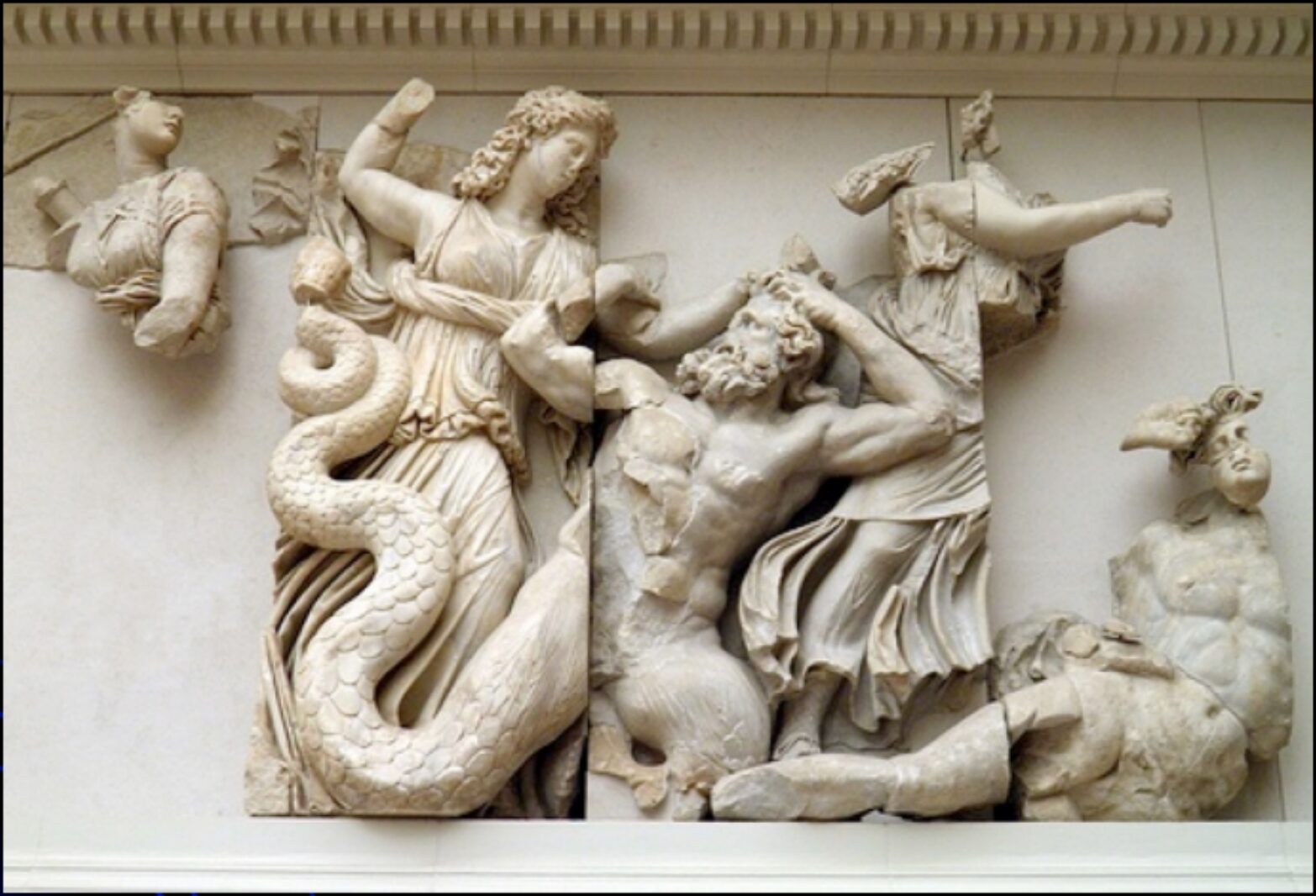
Did the base of operations move?
- Adolph Hitler became enamored with the Altar of Pergamon.
- The altar was the site of a luncheon for the International Olympic Committee prior to the Olympic Games of 1936.
- His chief architect and, later, minister of armaments for the Nazi party, Albert Speer, used the Pergamon Altar as the model for the Nuremberg Field reviewing stand.
- Speer would be quoted after the Second World War as saying that it is “hard to recognize the Devil when he has his hand upon your shoulder.”
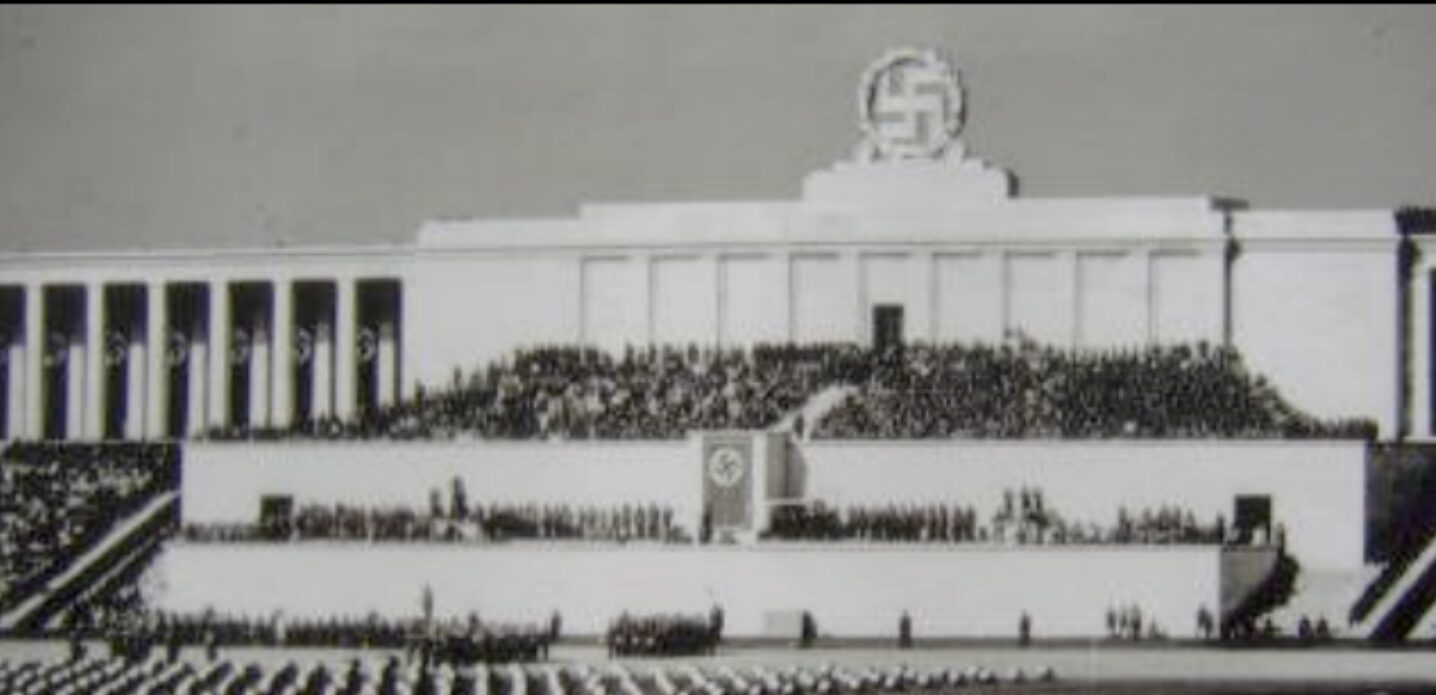
The throne of Satan gets a face-lift
I next decided that I should probably pay a visit to the Pergamon altar to see this symbol of darkness in person. I was even more shocked to learn that this “football field” size structure had been put in moth balls as part of a renovation project, and it had been packed up exactly 40 days to the day ahead of my visitation from the angel (dream). The official story had been that the Pergamon museum had some plumbing issues that needed to be fixed. Administrators decided that it would be a good time to install a glass roof to the building and had spent nearly 500 million dollars on the project during the first phase. The Pergamon Altar was supposed to reopen in 2019, but remains closed even still today, with a tentative date of return in late 2024 or early 2025 – perhaps coinciding with the “Great Reset” of the World Economic Forum, which is also slated for 2025 (see associated pages for each of these topics). The project was referred to as the “Master Plan Museumsinsel,” by the Unger architectural firm. This struck me as poor wording for anything arising out of Germany based upon its heritage.
Overall, it would appear that a symbol of the dark has once again arisen, and is being given a makeover at a pivotal time in world history – one during which it appears a global governmental system is on the verge of arising – as predicted by the ancient Holy Scriptures contained in the Bible. We of the Remnant of the Way see this as a portent of a growing evil that is amassing for a last attempt at usurping God’s Divine authority. One that Scripture says is doomed to fail, and one that culminates in the final Day of the Lord. To us, the unveiling of the reconstructed altar may well coincide with a major world change.
A supernatural encounter around the material
Irenaeus spent the next year after his dream researching the above material, as well as an extensive background related to the rise of antisemitism and the occult in late 19th century Germany, and a study of famous individuals who believed they had encountered a supernatural being (surprisingly, the list of such individuals is quite lengthy, with many going on to amazing accomplishments or to great world harm). He built a large powerpoint documenting his dream and all of these associated findings. Irenaeus shared this powerpoint with his pastor one morning almost one year after he started his research. He had not shown this document to anyone previously nor talked about its content.
The discovery of a connection to Thomas Altizer
How the connection surfaced
- While Irenaeus was reviewing his initial presentation with his pastor during February of 2016, his pastor suggested that an academic had written a book about God’s death.
- This was prompted by a slide about Nietzsche, who said that God was dead (see The Gay Science [1882] and Thus Spoke Zarathustra).
- The pastor felt this had been written during the 1960s by an Emory professor.
- While Irenaeus had no overt awareness of this fact, he was convicted in his spirit that his pastor was correct.
- An internet search of the terms “God is dead” and “Emory” returned a 2006 Emory Magazine interview with Dr. Altizer, who had recently written his memoirs.

Multiple points of contact with the life and experiences of Irenaeus
- Both Altizer and Irenaeus shared a common historical ancestor.
- Altizer attended the University of Chicago; Irenaeus had been told to attend the same university by one of his professors.
- In the interview, Altizer noted that his grandfather had thrown a copy of Nietzsche’s Antichrist into the fire during his childhood.
- Several other overlapping personal circumstances.
Altizer’s own account
- Altizer described an experience during which he said he was utterly and wholly possessed by Satan, after which he wrote his books.
- This occurred after he attempted to become an Episcopal priest but failed a psychiatric examination.
- He created a group that referred to themselves as the “Christian atheists.”
- His theological teaching is gnostic in nature, with Christian symbolism and Buddhism thrown in for good measure.
- Where Nietzsche’s work suggested that God had been disproved by science, Altizer suggested that God was the universe, became man, and then died.
- Altizer eventually retired to the Pocono mountains in Pennsylvania — as did the exiled Turkish cleric, Imam Fethullah Gülen.
A same-day encounter with an unusual patient
- A patient evaluated by Irenaeus and his laboratory that same day asked several odd questions, leading him to bring up multiple items from Irenaeus’ original presentation — obscure findings from science and religion that he had shared with his pastor over breakfast that morning.
- He also sang a song about demons and made many odd comments — raising the infinity symbol, remarking that “we have had this conversation hundreds of times already, Irenaeus,” and saying that he was coming back soon as a little boy.
References
- Radt W. Pergamon: Geschichte und Bauten einer antiken Metropole. Darmstadt: Primus, 1999.
- Colins AY. Satan’s throne. Biblical archeology review 2006.
- Yeomans S. Ancient Pergamon. Bible history daily 2013.
- Radt W. The architecture of the great altar. In: Kastner V, ed. Pergamon, Citadel of the gods: Archaeological record, literary description, and religious development. Harrisburg, PA: Trinity Press International, 1998: 168–180.
- Mark JJ. Alexander the Great [online]. Available at: https://www.worldhistory.org/article/925/alexander-the-great-as-a-god/.
- Josephus F. The antiquities of the Jews: Complete and unabridged: Gutenburg Ebook.
- Plutarch. Greek lives: Oxford University Press, 1998.
- EDU WH. The Pergamon altar [online]. Available at: https://worldhistoryedu.com/the-pergamon-altar/. Accessed 1/01/2025.
- Bohn R. Altertumer von Pergamon. II. Das Helligtum der Athena Polias Nikephoros. Berlin: Deutsches Archaologisches Institut, 1885.
- Roberts A, Donaldson J, Coxe. AC, eds. Anti-Nicene fathers. Buffalo, NY: Christian Literature Publishing Company, 1885
- Knight K. New Advent [online]. Available at: https://www.newadvent.org/fathers/0127.htm. Accessed January 20, 2025.
- Homer. Iliad.
- Hansen EV. The Attalids of Pergamon, 2nd ed. Ithaca, NY: Cornell University Press, 1971.
- Griffith G, Sherwin-White S, van der Spek R. Antiochus (4) IV, 'Epiphanes' ('Manifest God’), c. 215–164 BCE. Oxford Classical Dictionary. 2015, December 22 ed2015.
- Taylor MJ. The Seleucid army of Antiochus the great: Weapons, armour and tactics: Pen and Sword Military, 2022.
- Cotton H. The five bbooks of Maccabees in English: Martino Fine Books, 2020.
- America OCo. Hieromartyr Antipas, Bishop of Pergamon and disciple of Saint Johhn the theologian [online]. Available at: www.oca.org. Accessed February 1, 2025.
- James MR. Antipas. In: Hasting J, ed. A dictionary of the Bible1898.
- Rome TT. Pergamon: A most loyal friend to Rome [online]. Available at: https://www.timetravelrome.com/2019/04/27/pergamon-most-loyal-friend-rome/.
- Kellie SM. Cult of Asclepius. The Lancet 1999;354:1038.
- Ovid. Metamorphoses 1. Bloomington, IN: Indiana University Press.
- Bailey JE. Asklepios: Ancient hero of medical caring. Annals of Internal Medicine 1996;124:257–263.
- Wickkiser BL. Asklepios, medicine, and the politics of healing in fifth-century Greece: Between craft and cult. Baltimore, MD: The Johns Hopkins University Press, 2008.
- Strong J, McClintock J. The cyclopedia of biblical, theological, and ecclesiastical literature. NY: Harper and Brothers, 1880.
- Karl F, Doerner E. Von Pergamon zum Nemrud Dag. Die archaelogischen Entdeckungen Carl Humanns. Mainz: von Zabern, 1989.
- Friesen SJ. Satan’s throne, imperial cults and the social settings of revelation. Journal of the Study of the New Testamennt 2005;27:351–373.
- Speer A. Inside the third reich. London, UK: Weidenfeld & Nicolson, 1970.